How Custom Blends Enhance Flavor and Nutrition in Food Ingredients
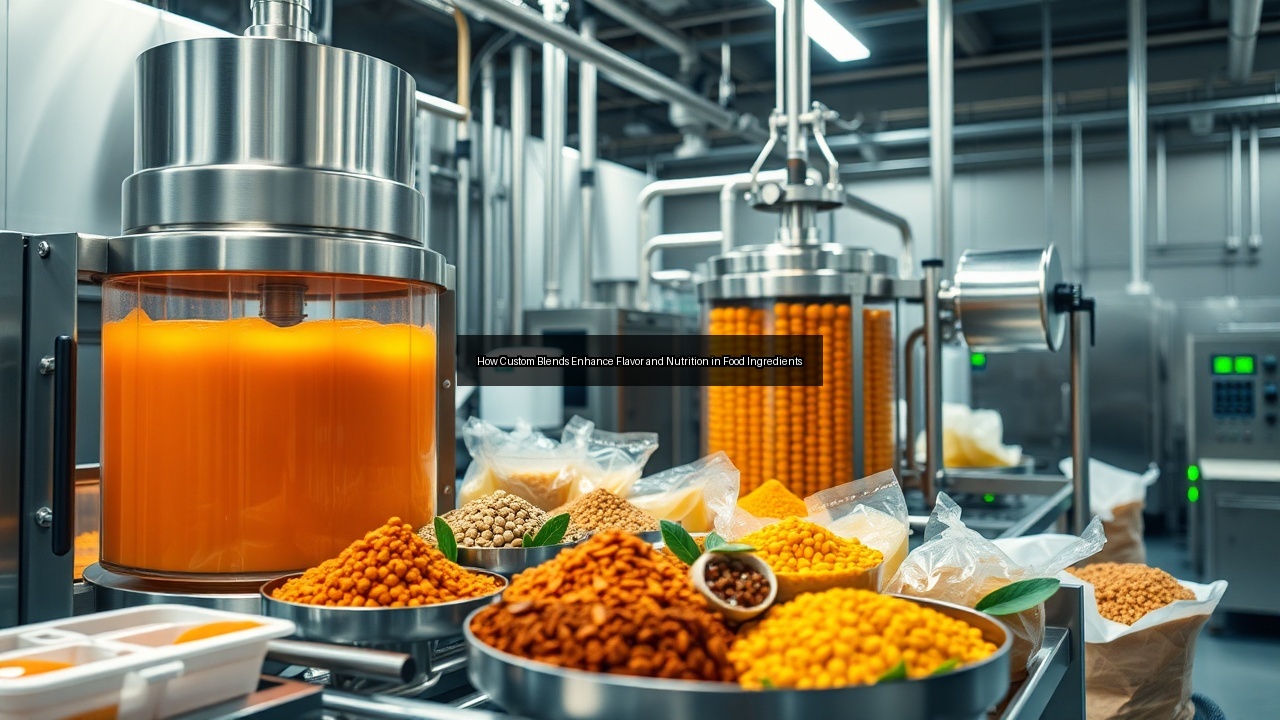
The Role of Custom Blends in Food Ingredients
Understanding Custom Blending Solutions
Custom blending solutions allow manufacturers to combine specific food ingredients into precise mixtures that deliver targeted flavor profiles and nutritional benefits. Companies rely on these approaches to create blends that address exact requirements in product development. Food ingredient suppliers use custom blending services to mix elements like spices, vitamins, and extracts without introducing unwanted additives. This process supports consistent results across batches and meets demands from the food and beverage sector. Producers gain flexibility when they select custom blends that align with market trends toward cleaner labels and enhanced taste. Blending solutions also reduce waste by optimizing ingredient use during manufacturing. Many firms now offer custom blending solutions that incorporate both primary packaging and secondary packaging considerations from the start. These services ensure that the final food ingredients maintain stability and appeal throughout distribution.
Importance of Flavor and Nutrition
Flavor and nutrition drive consumer choices in every category of food ingredients. Custom blends elevate both by balancing taste with added vitamins, minerals, and antioxidants. Food manufacturers apply custom blending solutions to boost nutritional density while preserving authentic flavors that consumers expect. This dual focus helps products stand out in competitive markets where buyers seek functional benefits without compromise. Custom blending services integrate natural extracts that intensify aroma and deliver measurable health advantages. Producers track performance through sensory evaluations and lab tests to confirm that each blend meets stated nutrition goals. The approach supports reformulation efforts that lower sugar or sodium levels without sacrificing enjoyment. Companies that prioritize these elements build stronger brand loyalty among health-conscious shoppers who examine ingredient lists closely.
The Science Behind Custom Blends
Science guides every step in developing custom blends for food ingredients. Researchers analyze molecular interactions between components to predict how flavors evolve during processing and storage. Custom blending solutions rely on precise measurements of particle size, pH levels, and solubility to achieve uniform distribution. Experts apply this knowledge to create blends that release taste notes at specific points in consumption. Food and beverage teams use advanced analytical tools to verify nutritional retention after exposure to heat or light. The science also addresses stability challenges that arise when combining multiple food ingredients. Through controlled experiments, manufacturers refine ratios that maximize both flavor intensity and nutrient bioavailability. Custom blending services translate these findings into scalable production methods that deliver repeatable quality across large volumes.
Innovative Applications of Custom Blending in Food and Beverage

Juice Concentrates: A Case Study
Juice concentrates demonstrate the power of custom blending solutions in action. Processors combine fruit purees with functional additives to create concentrates that deliver intense flavor and added nutrients. One application involves blending citrus and berry bases with vitamin C and antioxidants to produce a stable ingredient for beverages. Custom blending services adjust sweetness and acidity levels to match specific beverage formulations. Manufacturers benefit from reduced shipping costs because concentrates occupy less space than single-strength juices. The resulting food ingredients maintain bright color and fresh taste even after reconstitution. Case studies show improved shelf life when producers apply precise blending techniques during manufacturing. These solutions also allow brands to launch seasonal or limited-edition drinks quickly by modifying concentrate recipes without new equipment investments.
Enhancing Beverage Flavors
Beverage developers turn to custom blending solutions to craft distinctive taste experiences. They combine natural extracts, sweeteners, and acids into unified mixtures that integrate seamlessly into finished drinks. Custom blending services enable fine-tuning of aroma release and mouthfeel to create memorable products. Food and beverage companies use these blends to replicate complex flavors like tropical fruits or spiced herbs without relying on artificial compounds. The process supports low-calorie versions by balancing sweetness perception with other sensory elements. Producers test multiple iterations during development to ensure the blend performs consistently across different packaging formats. Flexible packaging options further protect volatile flavor compounds during transport and retail display. Such innovations help brands differentiate their beverage lines in crowded aisles.
Flexible Packaging Solutions for Blended Products
Flexible packaging plays a central role in protecting custom blends of food ingredients. Manufacturers select films and laminates that shield blends from moisture, oxygen, and light while maintaining product integrity. Custom blending solutions often include guidance on primary packaging that preserves flavor and nutrition from production through consumer use. Secondary packaging adds structural support for shipping and shelf presentation. Food and beverage firms adopt these options to reduce material waste compared with rigid containers. The compatibility between blended ingredients and packaging materials prevents migration or off-flavors. Producers also explore recyclable flexible packaging to meet sustainability targets without sacrificing performance. These choices extend product life and support efficient manufacturing workflows.
Manufacturing Processes for Custom Blends
Batch Production Techniques
Batch production techniques form the backbone of reliable custom blending solutions. Operators weigh and combine ingredients in controlled environments to achieve exact specifications for each food ingredient mixture. Custom blending services monitor temperature, mixing speed, and time to prevent degradation of sensitive components. This method allows rapid adjustments when client requirements change. Manufacturers scale batches from pilot sizes to full production runs while preserving consistency. Batch records document every step for traceability and quality verification. Food and beverage companies appreciate the traceability that batch production provides across their supply chains. The approach also accommodates small runs of specialized blends that serve niche markets or test new concepts before wider release.
Ensuring Quality with GFSI Standards
GFSI standards set the benchmark for safety and quality in custom blending solutions. Facilities implement rigorous protocols that cover raw material inspection, processing hygiene, and finished product testing. Custom blending services maintain certification through regular audits that verify adherence to global food safety requirements. These measures protect consumers and reduce the risk of recalls for food and beverage brands. Manufacturers train staff on GFSI principles to embed quality at every stage of production. Documentation systems track deviations and corrective actions to drive continuous improvement. The standards also address allergen control and cross-contamination prevention during blending operations. Companies that meet GFSI expectations gain preferred supplier status with major retailers and processors.
USDA Regulations and Compliance
USDA regulations shape how custom blending solutions handle organic and conventional food ingredients. Producers must verify sourcing, processing methods, and labeling accuracy to maintain compliance. Custom blending services follow strict guidelines on additive use and nutritional claims. Manufacturing teams conduct internal reviews to confirm that each batch meets USDA criteria before release. Documentation includes origin certificates and processing logs that support audit readiness. Food and beverage clients rely on these compliant blends to market products with specific designations. The regulations also influence packaging choices that preserve organic integrity. Compliance efforts build trust with buyers who prioritize verified sourcing in their ingredient selections.
The Future of Custom Blending in Food Industry

Emerging Trends in Custom Solutions
Emerging trends point toward greater personalization in custom blending solutions. Developers explore plant-based proteins and adaptogenic herbs to create blends that target wellness outcomes. Custom blending services incorporate data from consumer preferences to refine flavor and nutrition combinations. Food and beverage innovators test blends that support specific dietary patterns such as keto or gluten-free. The trend toward transparency drives demand for traceable ingredients within each mixture. Manufacturers invest in modular production lines that accommodate frequent recipe changes. These developments position custom blends as key tools for responding to shifting market demands. Companies that adopt early gain competitive edges through differentiated product offerings.
Sustainability in Packaging and Blending
Sustainability influences every aspect of custom blending solutions and associated packaging. Producers seek renewable sources for food ingredients and reduce energy use during batch production. Custom blending services evaluate carbon footprints of each component to minimize environmental impact. Flexible packaging made from recycled or compostable materials extends these efforts to the finished product. Food and beverage manufacturers collaborate on closed-loop systems that reclaim packaging after use. The focus on sustainability also encourages longer shelf life through optimized blends that reduce food waste. Companies communicate these practices to consumers who value responsible production methods. Continued progress in this area supports both regulatory compliance and brand reputation.
Innovation through Technology
Technology accelerates innovation in custom blending solutions for food ingredients. Automation and sensors provide real-time monitoring during manufacturing blending companies to maintain precise ratios. Custom blending services integrate software that models flavor interactions and predicts nutritional stability. Food and beverage teams use these tools to shorten development cycles and reduce trial-and-error costs. Advanced analytics identify opportunities to replace synthetic additives with natural alternatives. The integration of technology also improves traceability from raw material to final blend. Producers explore robotics for handling and packaging tasks that enhance worker safety and consistency. These advancements ensure custom blends remain at the forefront of industry progress.